
Trees
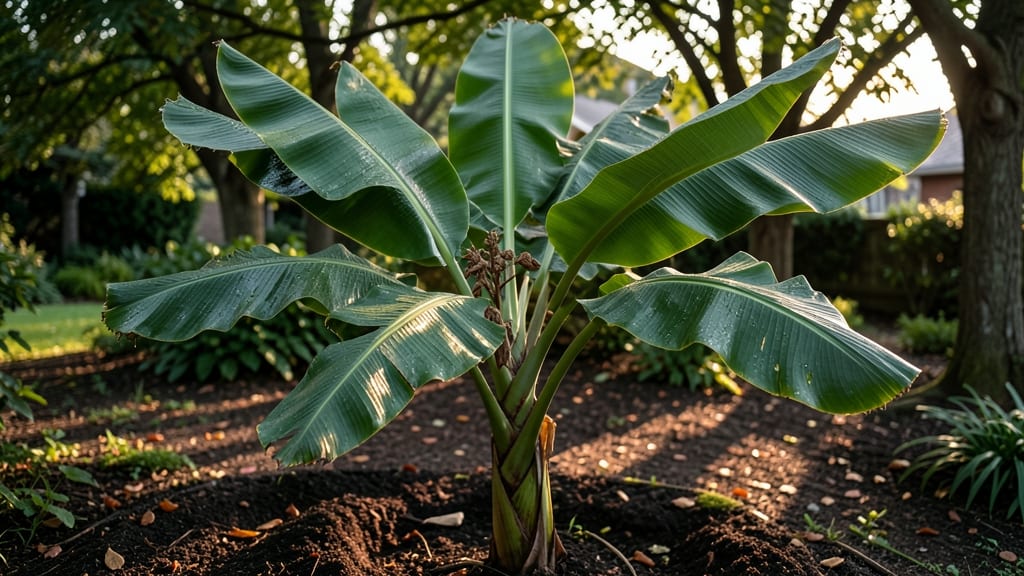
The Basjoo banana tree's fruit is almost never edible in temperate climates, as the plant prioritizes cold-hardy foliage over fruit production. Even under perfect conditions, fruiting happens every 5–10 years, producing tiny, hard bananas that lack the flavor and texture of tropical varieties.
This focus on leaves over fruit comes from the Basjoo's evolutionary adaptation to survive cold winters—its energy goes into growing large, dramatic foliage rather than producing fruit. 🌿 The bananas it does bear are more of a botanical curiosity than a culinary prize, often measuring just 2–3 inches long and tasting bitter or bland.
If you're growing this tree for shade or ornamental value, the lack of fruit is actually an advantage, as it means more resources for those stunning tropical-looking leaves.
For gardeners curious about fruiting potential, the key is patience and ideal growing conditions: full sun exposure, well-draining soil, and protection from harsh winds.
Even then, the fruit won't be anything like the bananas you'd find at the grocery store—think of them as nature's way of saying "look at these amazing leaves instead!"
💡 In This Article
- Why Basjoo Banana Trees Rarely Bear Fruit
- Maximizing Basjoo Banana Tree Growth for Non-Fruiting Benefits
Why Basjoo banana trees rarely bear fruit
The Basjoo banana tree (Musa basjoo) evolved in East Asia's temperate climate, where winter freezes would kill tropical banana species. This adaptation forces it to prioritize survival over reproduction.
Unlike tropical bananas that produce fruit annually, the Basjoo allocates nearly all its energy to growing large, cold-resistant leaves—up to 10 feet long—rather than developing fruit clusters. The plant's growth hormones shift dramatically during cooler months, suppressing flowering signals that trigger banana production in warmer climates.
When fruiting does occur, it's a rare event tied to specific conditions: consistent temperatures above 65°F for at least 3 months, coupled with 6+ hours of direct sunlight daily.
Even then, the fruit emerges only after 5-10 years of maturity—a stark contrast to tropical bananas that flower within 2-3 years.
The bananas themselves are tiny (2-3 inches long), hard, and lack the starch content of edible varieties, making them more of a botanical curiosity than a food source. 🌱
The trade-off becomes clear when comparing leaf production: A healthy Basjoo can generate 20-30 new fronds annually, while tropical bananas might produce just 1-2 fruit bunches per year. This leaf-heavy growth strategy explains why gardeners in USDA zones 5-9 rarely see fruit—the plant's survival mechanisms override reproductive instincts.
The few cases where Basjoo trees fruit typically happen in Zone 8 or warmer, where winter temperatures rarely drop below 20°F.
Hormonal differences play a crucial role too. Tropical bananas produce ethylene gas to trigger flowering, while the Basjoo's cold-hardy genetics suppress this process until conditions are nearly perfect. Even when flowering occurs, the resulting fruit is often sterile or underdeveloped, unable to reach maturity.
This explains why the bananas you might find in nurseries are rarely edible—they're more about showcasing the plant's ornamental potential than culinary value.
For context, consider how the Basjoo's cousin, the Dwarf Cavendish banana, produces 10-15 pounds of fruit per bunch annually. A Basjoo's "fruit" might yield just 1-2 ounces of hard, bitter bananas—if it fruits at all.
This dramatic difference highlights how the Basjoo's adaptations prioritize foliage over fruit production, making it a fantastic ornamental plant but a poor candidate for banana harvests.
What most gardeners don't realize is that the Basjoo's fruiting potential isn't just about climate—it's also about genetic programming. The species was selected over centuries for its cold tolerance, not fruit quality.
Even when given ideal growing conditions, the plant's DNA remains focused on leaf production and survival, not reproduction. This is why you'll rarely see Basjoo trees in commercial banana production—they're simply not designed for it. 🌿